The jobs report today has become one of the most talked-about topics in the United States. Investors, economists, and financial analysts closely watch every job report because it provides important insights into the strength of the US economy and the condition of the labor market.
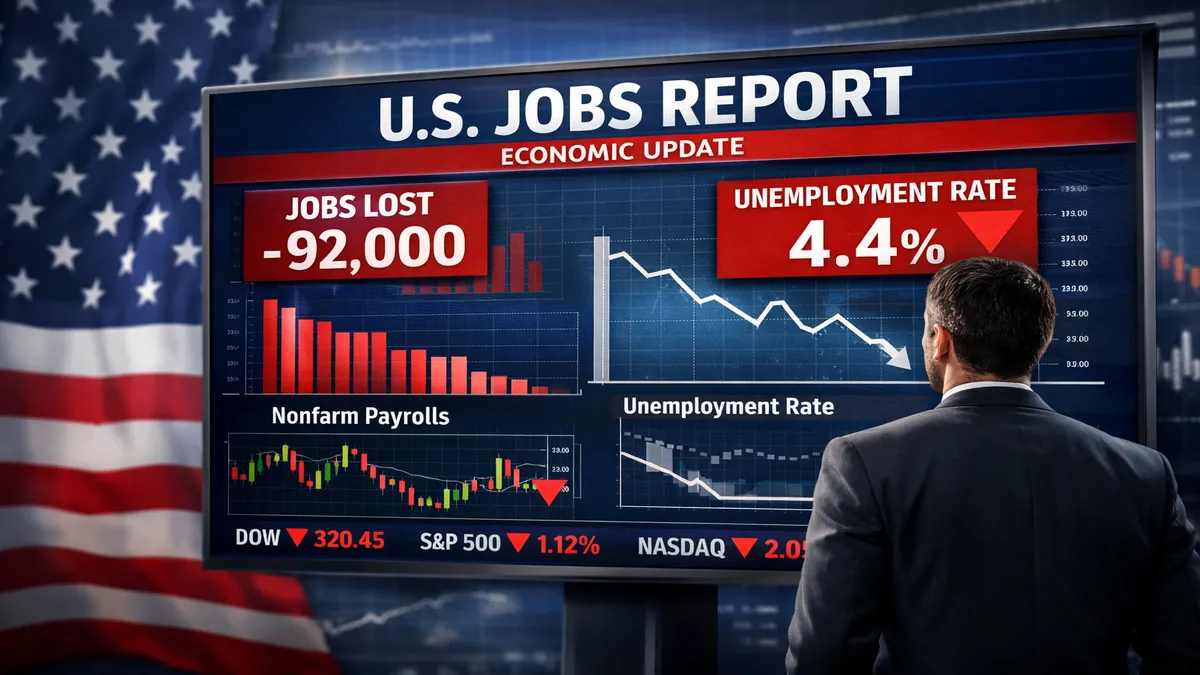
According to the latest jobs report, employment growth came in lower than many experts had expected. The report suggests that the number of available jobs in several sectors did not increase as strongly as predicted. This has raised concerns among market analysts about the future pace of economic growth.
One of the most important points highlighted in the jobs report today is the change in the unemployment rate. The data indicates a slight rise in unemployment, which may suggest that hiring activity is slowing down after a period of strong job creation in the United States.
The job report provides detailed information about hiring trends across multiple industries, including technology, healthcare, retail, and manufacturing. Economists carefully analyze these numbers to understand whether the labor market is expanding or beginning to slow down.
Financial markets reacted quickly after the release of the jobs report today. Traders and investors closely monitored the movement of DJIA futures and Dow futures, which showed noticeable volatility shortly after the employment data was announced. Market participants often use this data to predict how the economy might perform in the coming months.
The movement in DJIA futures and Dow futures reflects investor expectations about economic growth, inflation, and future interest rate decisions. When the jobs report shows weaker-than-expected job growth or rising unemployment, it can cause uncertainty in financial markets.
Many economists believe that the latest jobs report today could influence future decisions by the Federal Reserve. Central bank policymakers often rely on employment data when deciding whether to raise, lower, or maintain interest rates.
The jobs report is considered one of the most important economic indicators in the United States. It provides a detailed snapshot of the country’s labor market by measuring job creation, unemployment levels, and overall employment trends.
Despite the recent changes highlighted in the job report, some experts believe the US labor market still remains relatively strong compared to historical standards. However, future jobs report releases will be closely watched to see whether the current slowdown continues.
Investors, businesses, and policymakers will continue monitoring upcoming employment data and movements in DJIA futures and Dow futures to better understand the direction of the US economy.